Two for the pricelessness of one! Jessica Duchen reviews our Magnificent Mezzos
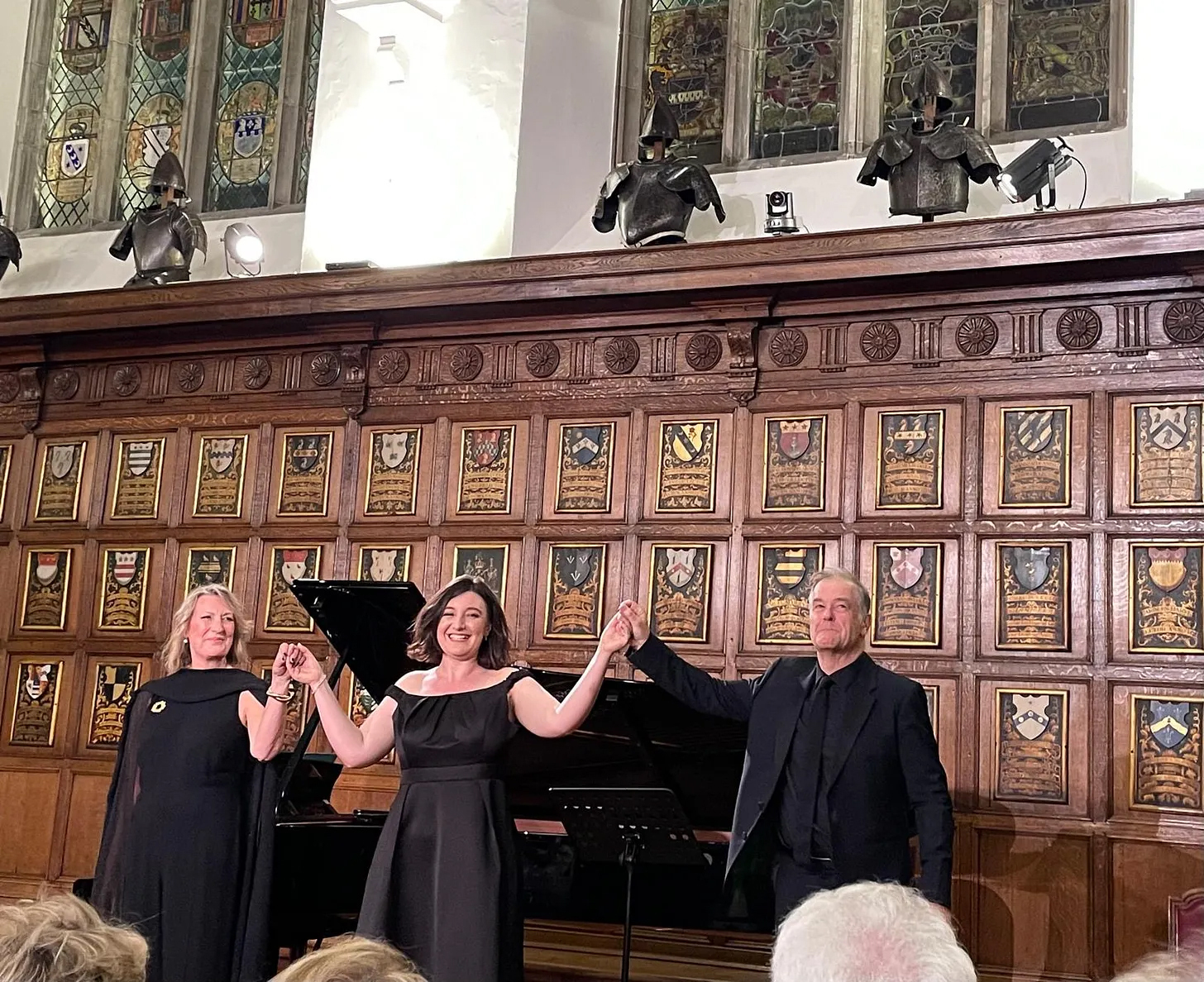
Under the Armour: When Great Mezzos Meet
Two for the pricelessness of one! Sarah Connolly and Beth Taylor join forces for an extraordinary evening at Temple Music. Plus my Sunday round-up...
Same fach, different worlds? If anyone wanted to compare and contrast two of today’s pre-eminent British mezzo-sopranos, the Temple Music Foundation offered a rare chance last Tuesday.
Dame Sarah Connolly has set benchmarks in roles as varied as Giulio Cesare (in David McVicar’s magnificent Glyndebourne production), Octavian in Der Rosenkavalier and Fricka in Die Walküre. This radiant queen of the mezzos was joined on Tuesday night by, as it were, the crown princess: Beth Taylor from Scotland, who swept everyone away with Elgar’s Sea Pictures at the Royal Festival Hall a few months back.
In the newly refurbished Middle Temple Hall, against a backdrop of heraldry, suits of armour and portraits of Tudor and Stuart monarchs, the duo, aided and abetted at the piano by the excellent Julius Drake, carried us through music by 12 composers in four languages. Actually, 13 composers: an Offenbach treat popped up as encore.
Connolly opened proceedings with Robert Schumann’s Hans Christian Andersen songs Op. 40 and Mary Stuart Lieder Op. 135: haunting, often spine-chilling creations in which her expertise in storytelling and sheer range of emotional expression could call up a mother’s hopes and fears, the bitter fury of betrayal, or mortal terror as Mary Queen of Scots writes to Elizabeth I (whose portrait glared down on us from a nearby wall). Her fire-and-brimstone articulation was a reminder, too, of how close to Schumann’s idiom Wagner could often be.
Taylor’s first offering was from Reynaldo Hahn (Marcel Proust’s young Venezuelan lover), whose songs fit the word ‘exquisite’ almost too well. Roll Fauré’s sensitivity and Duparc’s sensuality into one, then double it, and you’ll have some idea of his idiom. Taylor summoned a spellbinding atmosphere of hushed wonder in the third song, L’heure exquise (a setting that holds its own beside those by Fauré, Debussy, Chausson and Poldowski).
Indeed, she inhabited this music so fully that when she lost her way in the second song and let out a gale of laughter while diving for the i-pad, the surprise was not that she had stopped, but that she was speaking 21st-century Glaswegian, not 19th-century French. She had all but convinced me that she was in fact Marguerite de Saint-Marceaux.
The pair split Elgar’s Sea Pictures between them, Connolly taking three and Taylor the two biggest, including ‘The Swimmer’. I admit to mixed feelings about these songs as they can seem both dated and offputtingly grand – but not when they’re sung like this. Connolly’s were as natural, direct and real as breathing and speaking; and Taylor blazed forth with what could be her entire arsenal - force of personality, immense vocal range, all-giving passion. It’s hard to imagine that such overwhelming intensity could go any further, but frankly I wouldn’t put anything past her.
In part two, the British repertoire – Britten’s Mother Comfort and A Charm of Lullabies, plus a surprise, Herbert Howells’ King David (replacing an intended David Matthews London premiere) – were somewhat overshadowed by the French-plus that followed: Taylor in songs by Tailleferre, Chaminade and Holmès. All were excellent, but Holmès’ Le vin took the cake. It’s an unlikely yet stunning evocation of being exceedingly drunk, which must have seemed just a tad indecorous for a lady of her day (1847-1903). She even, shock horror, wrote the words herself. [Note to self: look further into this.]
Bubbly duets by Fauré, Granados and Saint-Saëns formed a rousing conclusion; and as the cherry on the (taken) cake, the Offenbach Gendarmes Duet, complete with hats and canes, raised the roof.
In the end, it remains almost impossible to compare Connolly and Taylor. Apples and oranges? More like whisky and bordeaux? But how incredibly lucky we are to have them.